

Key Points
- Agentic AI analyses situations and takes action rather than merely responding to queries
- McKinsey projects generative AI could create $2.6 trillion to $4.4 trillion annually
- 86 per cent of companies expect AI to transform operations long-term
By Ashish Kumar
For several years, businesses have utilised artificial intelligence to compose emails, generate reports and analyse data. While this use of AI does have its advantages, many systems still require input from a human before determining what will be done next. Agentic AI allows for the development of a more advanced method of providing assistance. It can analyse a case and perform decision-layer functions as well, meaning it does not just respond to inquiries; it takes action.
EVENT
Infosec Reimagined
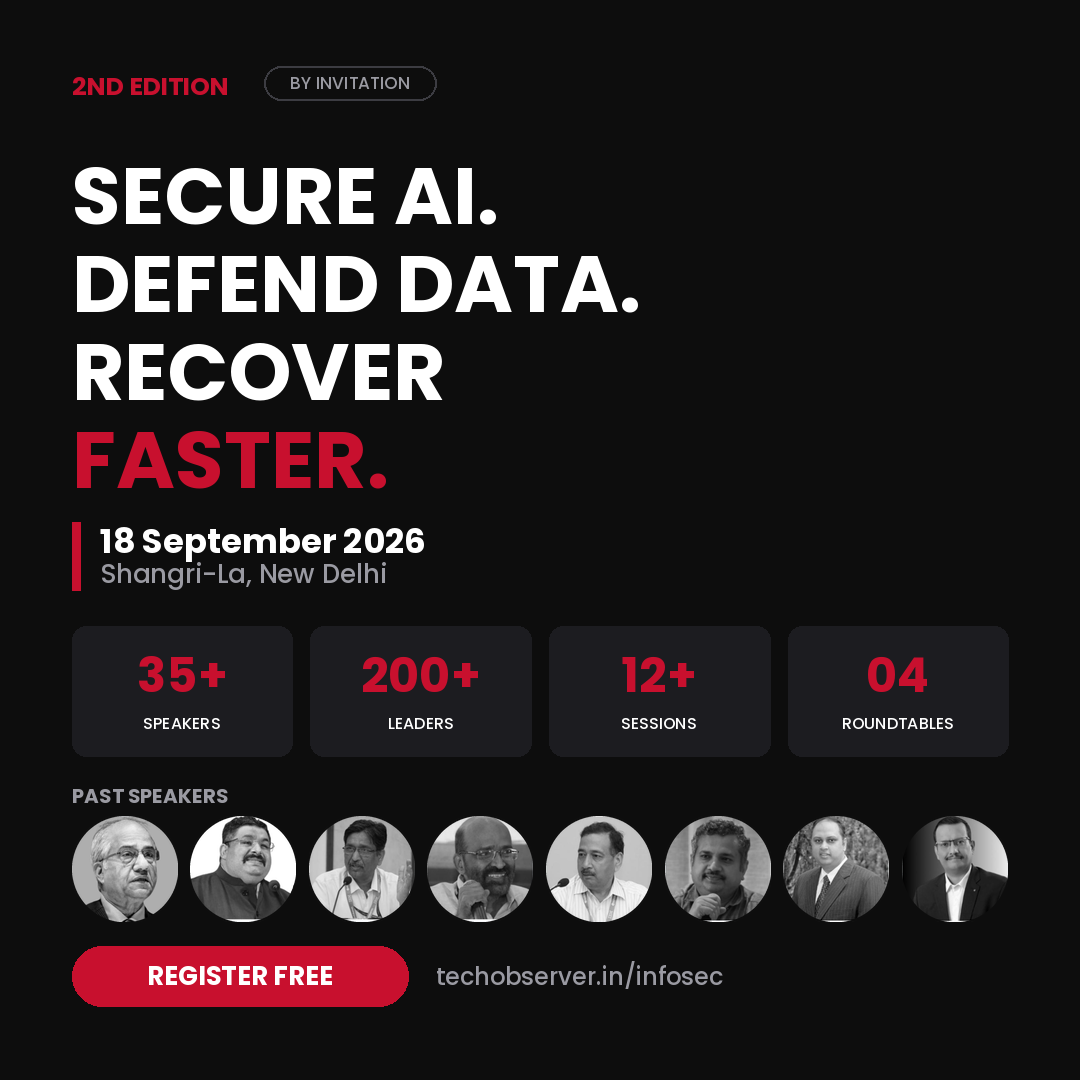
Infosec Reimagined 2026 is the premier information security summit where top leaders—CISOs, CROs, CIOs, CTOs and risk executives—converge to redefine cyber resilience.
EVENT


Digital Senate
Digital Senate is a premier conference uniting government leaders, technologists and innovators to share ideas, success stories and strategies on digital governance, public sector transformation, cybersecurity and emerging technologies in India.
EVENT


CIO Prism
CIO Prism unites forward-thinking technology leaders to exchange transformative insights, shape digital strategies, and foster innovation, empowering enterprises to excel in an era of rapid technological change.
EVENT


National DefTech Summit
Featuring keynotes, expert panels, live tech demos and strategic networking, the summit will drive actionable insights for defence sector.
EVENT


Future-Ready Defence
A Leadership Dialogue on sovereign, trusted data infrastructure, AI readiness and mission resilience for Defence Forces.
According to McKinsey, generative AI is likely to produce between $2.6 trillion and $4.4 trillion in value each year, while 86 per cent of companies surveyed by the World Economic Forum think that the technologies of AI and data processing are bound to change operational procedures in the long run.
To illustrate, consider a scenario where an invoice becomes overdue. While traditional AI will let you know that it is overdue, one that executes agentic operations will be able to analyse the background of the creditor’s payments, calculate risks, suggest what to do next and take the next step as per the company’s policies.
This leads to a new question for business leaders and executives, one that moves beyond the traditional “How can AI help us?” to “What should AI do next?”
To answer that, context is critical. A figure by itself means little. Its value comes from connecting it with buyer behaviour, market trends, inventory levels and overall business performance. AI tools that can combine these signals will therefore be far more useful than systems that simply generate intelligent-sounding answers.
However, smarter technology does not mean removing humans from the process. The real value of enterprise AI will lie in its ability to analyse complex situations, weigh options and identify risks while keeping people in control of important decisions. A CFO, for instance, could use AI to assess an investment decision, while a customer support team could use it to identify the root cause of a complaint and recommend the most appropriate response.
The most fascinating shift, though, is likely to occur when AI comes in contact with other technologies. The Internet of Things, cloud computing, edge computing [processing data closer to where it is generated rather than in centralised servers], robotics, digital clones, 5G, cybersecurity and advanced data systems turn AI from a self-sufficient technology into a component of a bigger technological stack.
Advertisement
Various industries are gaining great advantage from connecting numerous technologies together so that they can work more effectively. In manufacturing, for instance, IoT sensors can detect a change in machinery and edge computing can analyse it right away. Furthermore, artificial intelligence can predict failures and robots can help with maintenance.
In the financial sector, advanced tools from AI and the speed of real-time data allow for the creation of modern fraud detection systems. In retail business, various information regarding customer behaviour and inventory in combination with AI is used to improve forecasting. In the healthcare industry, connected devices along with AI allow companies to process information better and make better operational decisions. Thus, businesses should reassess their construction in a more adaptive environment enabled by these advancements. Cybersecurity ensures trust in this chain of technologies.
Therefore, the next big advantage does not come from the most powerful AI technology, but rather from the business that knows how to connect its new smart AI with technological advancement to benefit from more effective performance.
The author is Managing Director, Optivalue Tek. Views are personal.