

Key Points
- Slovakia’s Innovatrics topped UIDAI’s face recognition challenge ahead of US and Lithuanian firms
- Challenge used children’s biometric data spanning five years to test age variance
- Indian participants included Perfios, Ooru and IIIT Hyderabad but did not win
Foreign technology companies from Slovakia, the United States and Lithuania secured all top positions in the Unique Identification Authority of India‘s biometric software benchmarking challenge, with Indian participants failing to reach the podium despite UIDAI‘s stated goal of developing indigenous solutions.
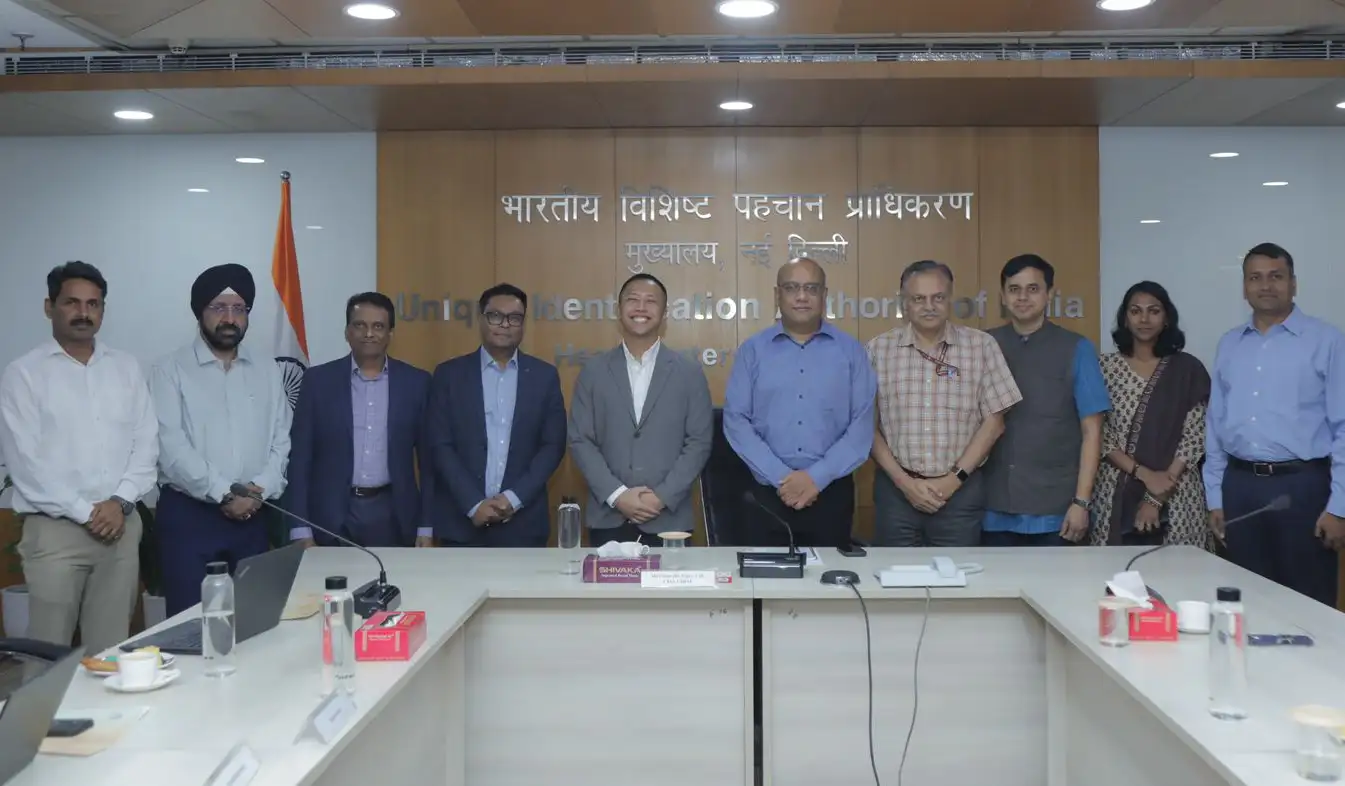
UIDAI announced the results on Monday (15 June) at an event conducted in collaboration with the International Institute of Information Technology Hyderabad (IIIT Hyderabad). The challenge assessed face and iris recognition software development kits — standardised tools that allow applications to verify a person’s identity by matching their biometric data against stored records.
EVENT

VeeamON 2026 Tour India – Delhi
A VeeamON 2026 India Leadership Series Delhi for senior public sector and government technology leaders.
EVENT


Infosec Reimagined
Infosec Reimagined 2026 is the premier information security summit where top leaders—CISOs, CROs, CIOs, CTOs and risk executives—converge to redefine cyber resilience.
EVENT


Digital Senate
Digital Senate is a premier conference uniting government leaders, technologists and innovators to share ideas, success stories and strategies on digital governance, public sector transformation, cybersecurity and emerging technologies in India.
EVENT


CIO Prism
CIO Prism unites forward-thinking technology leaders to exchange transformative insights, shape digital strategies, and foster innovation, empowering enterprises to excel in an era of rapid technological change.
The benchmarking exercise is significant because biometric authentication underpins India’s Aadhaar ecosystem, which serves as the identity verification backbone for government subsidies, banking services and telecommunications. Any software used to match fingerprints, faces or irises against the Aadhaar database must meet UIDAI’s accuracy and security standards.
UIDAI biometric SDK challenge results and participants
In the face recognition challenge, Innovatrics of Slovakia secured first position. IDBio from the United States came second, followed by Neurotechnology of Lithuania in third place. The iris recognition challenge saw a different order: IDBio took first position, with Neurotechnology second and Innovatrics third.
The competition drew 531 registrations across both categories. Indian participants included Perfios, a Bengaluru-based financial data company, Ooru and IIIT Hyderabad itself. None reached the top three in either category.
UIDAI said the face and iris challenges built upon an earlier fingerprint benchmarking exercise. The authority conducted the latest round between December 2025 and February 2026, using what it described as large, anonymised datasets under controlled conditions.
A distinctive feature of the challenge was the use of children’s biometric data collected over a five-year span. UIDAI tested how well verification systems could match faces and irises of children aged five to ten years against samples taken five years earlier — a real-world problem given that children’s biometric features change significantly as they grow.
UIDAI stated that this made the challenge unique globally, as no similar exercise had previously used such long-term child biometric datasets to assess age variance performance.
Advertisement
By the numbers
- 531
- Total registrations across face and iris challenges
- 5 years
- Age gap in children’s biometric test data
The authority said the initiative forms part of its effort to advance biometric research and identify high-performing verification solutions from technology providers and research institutions in India and elsewhere.
The aim, according to UIDAI, is to develop indigenous biometric SDK solutions — software tools built within India that could reduce dependence on foreign technology for identity verification.
However, the results underscore the gap between this stated objective and current capabilities. With all six podium positions across two challenges going to European and American firms, Indian companies and institutions have ground to cover before they can compete at the highest level in biometric verification technology.
Full details of the challenge methodology and results are available on UIDAI’s dedicated portal at biochallenge.uidai.gov.in.
Your Questions, Answered
What is a biometric SDK?
A biometric software development kit is a standardised set of tools that allows applications to verify a person’s identity by matching their fingerprint, face or iris data against stored biometric records. UIDAI uses such software to authenticate Aadhaar holders.
Which companies won the UIDAI biometric challenge?
Innovatrics of Slovakia won the face recognition challenge, while IDBio from the United States won the iris recognition challenge. Neurotechnology of Lithuania placed in the top three for both categories.
Did any Indian company win the UIDAI biometric challenge?
No Indian company or institution reached the top three in either the face or iris recognition categories. Indian participants included Perfios, Ooru and IIIT Hyderabad.
What made this biometric challenge unique?
UIDAI used children’s biometric data collected over a five-year period to test how well verification systems could match faces and irises across significant age changes — a real-world challenge for identity systems serving growing children.