

Key Points
- Government has introduced ₹1,000 crore venture capital fund for space sector
- India’s private space ecosystem now comprises over 400 startups
- ₹500 crore Technology Adoption Fund launched for commercialisation
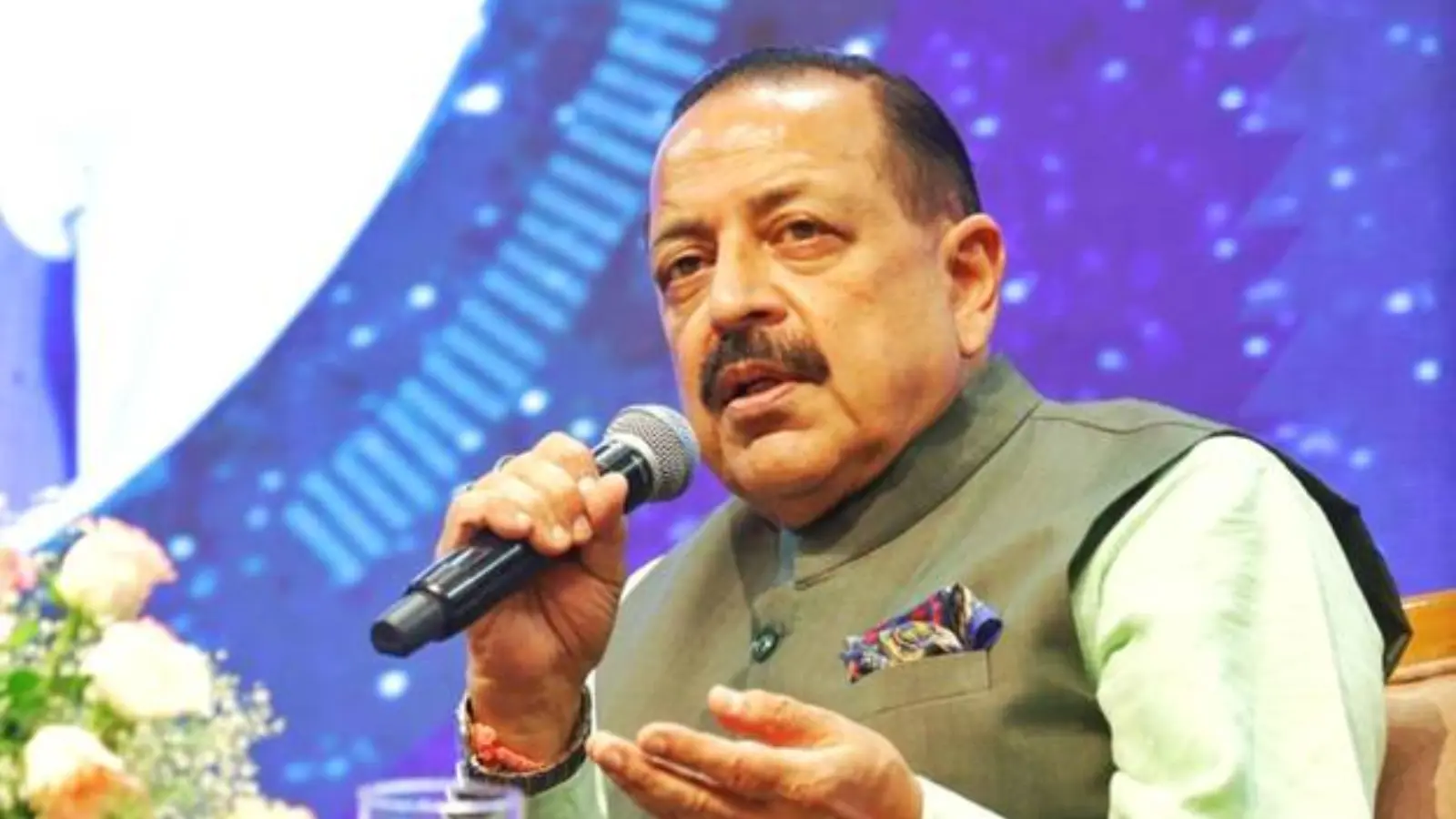
Union minister for Science & Technology Dr. Jitendra Singh has called on established industries to significantly increase investment in India’s space sector, arguing that achieving global leadership in space technology requires more than startup innovation alone.
Speaking at the 10th IN-SPACe Industry Connect, Singh said the government has introduced a ₹1,000 crore venture capital fund and a ₹500 crore technology adoption fund to support innovation and commercialisation in the sector.
EVENT

VeeamON 2026 Tour India – Delhi
A VeeamON 2026 India Leadership Series Delhi for senior public sector and government technology leaders.
EVENT


Infosec Reimagined
Infosec Reimagined 2026 is the premier information security summit where top leaders—CISOs, CROs, CIOs, CTOs and risk executives—converge to redefine cyber resilience.
EVENT


Digital Senate
Digital Senate is a premier conference uniting government leaders, technologists and innovators to share ideas, success stories and strategies on digital governance, public sector transformation, cybersecurity and emerging technologies in India.
EVENT


CIO Prism
CIO Prism unites forward-thinking technology leaders to exchange transformative insights, shape digital strategies, and foster innovation, empowering enterprises to excel in an era of rapid technological change.
India’s private space ecosystem has grown rapidly since the sector was opened to private participation, with the number of space startups now exceeding 400. Singh said Indian enterprises are developing launch vehicles, satellites, propulsion systems, Earth observation applications and space situational awareness capabilities.
He named Skyroot Aerospace, Agnikul Cosmos, Pixxel, Galaxeye, Digantara and Dhruva Space as examples of companies demonstrating the country’s entrepreneurial and technological capabilities.
Policy reforms and institutional support
The minister described the opening of the space sector to private players as a significant shift in India’s approach to strategic industries. The Indian Space Policy 2023 provided regulatory clarity to stakeholders, while the liberalisation of the foreign direct investment regime has helped attract capital and integrate Indian companies with global value chains, he said.
The Indian National Space Promotion and Authorization Centre, known as IN-SPACe, was established to enable, promote, authorise and supervise non-governmental participation across the space value chain. Singh said the body has been instrumental in bringing private players into an ecosystem previously dominated by the Indian Space Research Organisation.
Beyond the two major funds, the government has introduced seed funding, incubation support, skill development programmes and an AICTE-approved space technology curriculum. Singh said these initiatives are designed to build a talent pipeline for the expanding space economy.
Call for industry and philanthropic engagement
Singh acknowledged industry concerns about the pace of approvals, the complexity of regulatory processes and the need for an effective single-window clearance mechanism. He said the government’s objective should be to incentivise innovation rather than create barriers, and invited stakeholders to communicate their challenges directly.
Advertisement
The minister also called for greater philanthropic investment in scientific research. While charitable contributions have traditionally focused on social causes, Singh argued that funding research and innovation should be recognised as an equally important contribution to society.
By the numbers
- ₹1,000 crore
- Venture capital fund for space sector
- ₹500 crore
- Technology adoption fund for commercialisation
- 400+
- Space startups now operating in India
Collaboration between government, industry, academia, investors and state governments is essential to realise the vision of self-reliance in space, Singh said. He noted that the agility of startups must be complemented by the scale, financial strength and execution capabilities of established industries.
India’s aspirations in the space sector cannot be fulfilled through government efforts alone, Singh said, urging all stakeholders to work together to establish India as a leading force in the global space economy.
Your Questions, Answered
How much funding has the government announced for India’s space sector?
The government has introduced a ₹1,000 crore venture capital fund and a ₹500 crore technology adoption fund to support innovation and commercialisation in the space sector.
How many space startups are operating in India?
India’s private space ecosystem now comprises over 400 startups, along with several hundred large and small companies developing launch vehicles, satellites, propulsion systems and downstream applications.
What is IN-SPACe and what does it do?
The Indian National Space Promotion and Authorization Centre is the nodal body that enables, promotes, authorises and supervises non-governmental participation across the entire space value chain in India.
Which Indian space startups were mentioned by the minister?
Jitendra Singh named Skyroot Aerospace, Agnikul Cosmos, Pixxel, Galaxeye, Digantara and Dhruva Space as examples of companies demonstrating India’s entrepreneurial and technological capabilities in space.