

[ad_1]
Key Points
- AI governance, data security and privacy will shape India’s digital transformation
- Simli urges government, industry, academia and startups to collaborate closely
- Continuous monitoring is essential to address AI bias and explainability
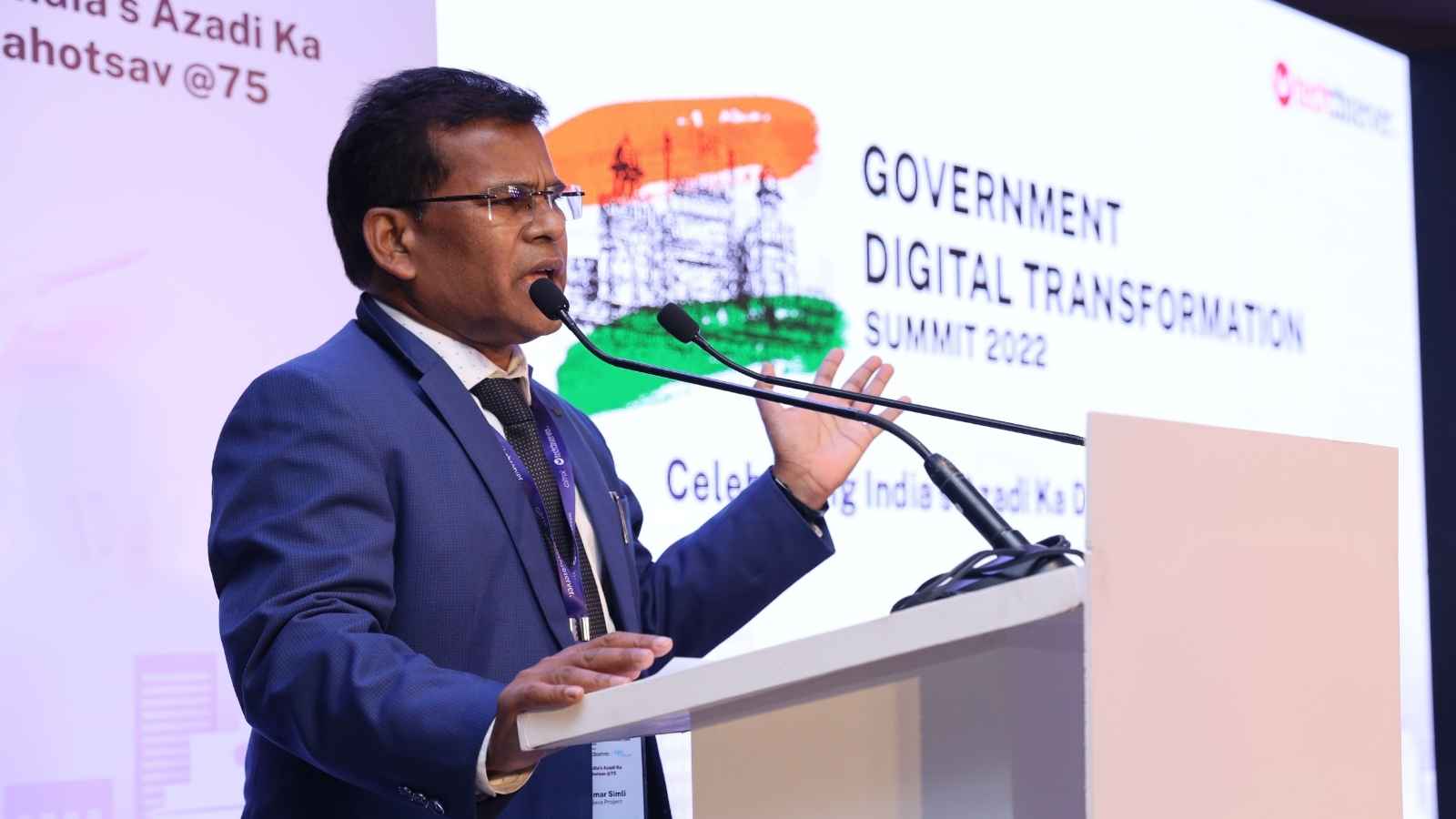
Artificial intelligence, data security and privacy will shape the next phase of India’s digital transformation, but large-scale adoption will depend on stronger governance and cooperation between government, industry, academia and startups, a senior technology executive said.
Golok Kumar Simli, President for Technology and Innovation at BLS International, said organisations should treat AI, security and privacy as connected priorities rather than separate technology projects.
EVENT
Infosec Reimagined
Infosec Reimagined 2026 is the premier information security summit where top leaders—CISOs, CROs, CIOs, CTOs and risk executives—converge to redefine cyber resilience.
EVENT


Digital Senate
Digital Senate is a premier conference uniting government leaders, technologists and innovators to share ideas, success stories and strategies on digital governance, public sector transformation, cybersecurity and emerging technologies in India.
EVENT


CIO Prism
CIO Prism unites forward-thinking technology leaders to exchange transformative insights, shape digital strategies, and foster innovation, empowering enterprises to excel in an era of rapid technological change.
EVENT

National DefTech Summit
Featuring keynotes, expert panels, live tech demos and strategic networking, the summit will drive actionable insights for defence sector.
“These are the domains which will define the upcoming posture, whether we are offering data-driven services, developing products and solutions or defining national data security,” Simli said in an exclusive interview with TechObserver.in.
Simli, who previously served as Principal Advisor and Chief Technology Officer of the Passport Seva Programme at the Ministry of External Affairs, joined BLS International in 2025 to shape its technology roadmap. BLS provides visa, passport, consular and citizen services to governments and operates across about 70 countries, according to the company.
He said India should first recognise AI’s potential to analyse large datasets, identify patterns, improve services and support the development of new products and employment opportunities.
“Let us not only see the flip side of AI,” he said. “When you are dealing at a larger scale, with large datasets and trying to find patterns and insights, there is a lot of potential.”
However, systems used in public services and other sensitive sectors must be designed to address bias, explainability, privacy and security, Simli said. AI governance should continue after a model is deployed, with its outputs and behaviour monitored throughout its operating life.
“The most important factor in leveraging AI is how you continuously monitor it,” he said. “That must be part of the AI governance sequence.”
Advertisement
India’s national AI programme includes a Safe and Trusted AI pillar, alongside investments in computing infrastructure, datasets, skills, applications and startups. The focus shows a broader policy effort to promote AI adoption while developing safeguards around transparency, accountability and public trust.
AI regulation alone would not be sufficient
Simli said regulation alone would not be sufficient. Government can establish policy and legal frameworks, but industry must help convert them into working products and platforms. Universities and research institutions can contribute research and independent scrutiny, while startups can bring speed and unconventional approaches.
“Industry engagement is very important when it comes to products and solutions,” he said. “Government and policymakers, industry, academia, research institutions and the startup ecosystem all have to work together.”
He cited Passport Seva as an example of how technology and public-private collaboration can change citizen services at scale. Passport applicants can submit applications online, book appointments and track their status through the government portal, with updates also available through SMS.
“There was a time when citizens would wait for hours at passport offices,” Simli said. “Today, in many cases, before you even reach home from the passport centre, you receive a message saying that the passport has moved to the next stage. That is possible because of technology and automation at scale.”
The experience showed that digital transformation in government required more than installing software, he said. It depended on redesigned processes, institutional coordination, reliable infrastructure and clear accountability across participating organisations.
Simli also called for sustained investment in AI and cybersecurity skills, saying India would need a larger pool of professionals capable of developing systems as well as assessing their risks.
He said focused industry forums could help practitioners, researchers and policymakers identify gaps and set priorities, particularly as AI moves from experimental deployments into services that affect citizens and businesses.
“We need to generate many more such minds in India, especially in AI talent,” he said. “These forums help us understand where we need to focus.”
[ad_2]
Source link