

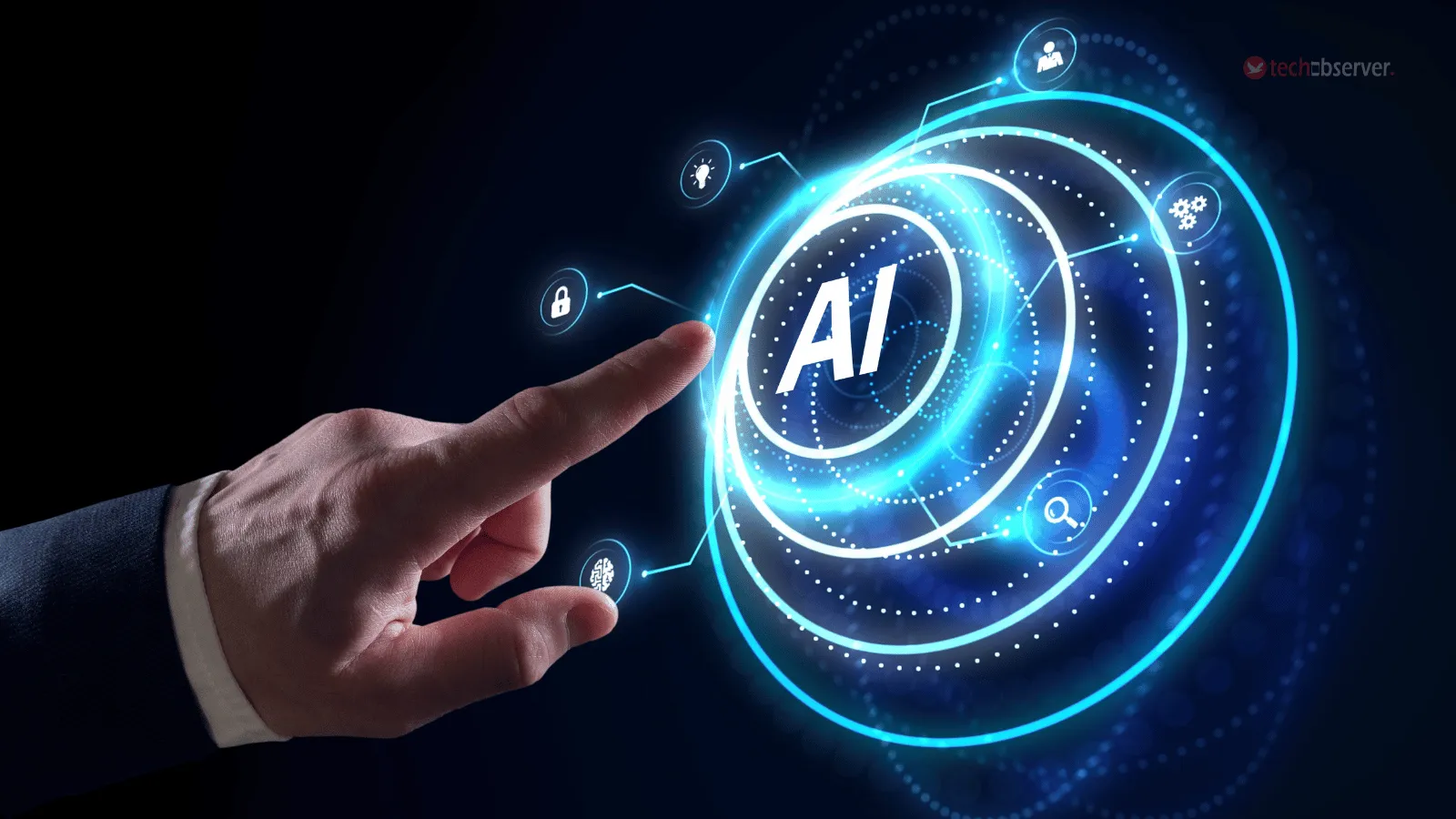
Since 2025, people across the globe have been sharing photographs transformed into Ghibli-style artwork to commemorate cherished moments such as birthdays and weddings. The process is simple: users upload a photograph to ChatGPT and prompt it to recreate the image in a Ghibli style. A simple photograph is then reimagined with soft palettes, ethereal lighting, and surreal atmospheres that evoke the distinctive aesthetic associated with the studio.
However, in the age of AI, a growing concern is the ease with which artificial intelligence tools can transform random images and photographs into imitations of Ghibli themes and styles. Social media platforms have been flooded with AI-generated images referred to as ‘Ghibli themed’ or ‘Ghibli style’ art, created using OpenAI‘s image generation models.
EVENT
Infosec Reimagined
Infosec Reimagined 2026 is the premier information security summit where top leaders—CISOs, CROs, CIOs, CTOs and risk executives—converge to redefine cyber resilience.
EVENT


Digital Senate
Digital Senate is a premier conference uniting government leaders, technologists and innovators to share ideas, success stories and strategies on digital governance, public sector transformation, cybersecurity and emerging technologies in India.
EVENT


CIO Prism
CIO Prism unites forward-thinking technology leaders to exchange transformative insights, shape digital strategies, and foster innovation, empowering enterprises to excel in an era of rapid technological change.
EVENT

National DefTech Summit
Featuring keynotes, expert panels, live tech demos and strategic networking, the summit will drive actionable insights for defence sector.
These tools allow users to produce detailed infographics, advertisements, and artistic renditions of personal photographs. While the trend peaked early last year, despite concerns regarding data privacy and copyright infringement, its popularity continues largely unabated.
The Walt Disney Company issued a cease-and-desist notice to Google, accusing it of using Disney’s copyrighted works to train its AI models. Disney described this as an infringement on ‘massive scale’.
AI-generated images are fundamentally derived from extensive libraries of human-created works. Unlike human artists, who infuse personal experience, emotion, and originality to their creations, AI models generate images by sampling vast datasets of existing art. OpenAI, as the developer of ChatGPT, plays a central role in enabling such AI-driven artistic transformations. While the company claims to approach style mimicry conservatively, the widespread circulation of Ghibli-inspired images online suggests a gap between stated policy and practical outcomes.
The updated GPT-4o model includes an image generation feature based on autoregressive algorithm, allowing users to produce detailed and contextually accurate images directly within the ChatGPT interface. The result is a powerful tool that responds dynamically to complex prompts and generates visually striking outputs.
In India, the Copyright Act 1957 is currently ill-equipped to address questions of authorship and ownership in relation to AI-generated content. Many artists criticise AI-generated art as a form of creative theft and a violation of intellectual property rights. Such content is often seen as lacking true creativity. Traditional Indian art forms such as Madhubani, Kalamkari, or the painting style of Raja Ravi Varma may have endured for generations, yet they too may be vulnerable to AI replication and associated copyright issues.
This raises an urgent question: what is the future of creative originality in the age of AI? While Studio Ghibli actively protects its copyrights and may challenge the unauthorised use of its stylistic elements, does this stance reflect broader ethical concerns within the global debate on AI-generated art?
Advertisement
At the heart of copyright law lies a fundamental distinction between an idea and its expression. For example, an expression in the form of a novel, poem or screenplay is protected under copyright law. However, an idea that is not expressed in a tangible or fixed form is not copyrightable. Consequently, plots, themes and abstract ideas are not protected under the Copyright Act.
According to the Oxford Dictionary, a ‘theme’ is defined as ‘the subject or main idea in a talk, piece of writing, or work of art’. According to Merriam-Webster, a ‘theme’ is ‘a subject or topic of discourse or of artistic representation’, or ‘a specific and distinctive quality, characteristic, or concern’. Themes may include abstract concepts such as love, success, failure, justice, freedom or belief, intangible concepts rather than concrete objects.
Legal frameworks differ significantly across jurisdictions. Japan and Singapore have adopted relatively permissive approaches, while the United States and the European Union emphasise transparency and ethical use of training datasets. Meanwhile, the lack of clear IP regulations and transparency in many Global South countries, often used as data sources for training AI models, further exacerbates vulnerability to exploitation.
Indian jurisprudence protects literary works, artistic works, cinematographic films, musical works, dramatic works, and sound recordings. Under section 17 of the Copyright Act 1957, the author of a work is generally considered the first owner of copyright, subject to certain exceptions. These include works created in the course of employment for newspapers or periodicals, and works such as photographs, paintings or films commissioned for valuable consideration, where ownership may vest with the commissioning party unless otherwise agreed. Once again, the distinction between idea and expression is crucial. While expressions fixed in a tangible form are protected, ideas, plots and themes are not.
However, the fine line between protecting creative expression and style or themes raises important legal questions and may lead to potential violations of moral rights. In the absence of a clear global ruling on AI-generated Ghibli-style imagery, courts are still determining whether such outputs fall under the doctrine of fair use. A key unresolved issue relates to the infringement of artistic style and themes. Copyright laws across most jurisdictions generally protect the specific expression of an idea, rather than the style, aesthetic, or thematic elements themselves, leaving the legal status of such AI-generated works uncertain.
AI-generated images, derived from extensive libraries of human-created works, risk undermining the years of skill, labour and creativity invested by original artists. The widespread circulation of Ghibli-style imagery online threatens not only the economic rights of artists but also their moral recognition. Since themes themselves are not copyrightable, studios such as Ghibli may find themselves fighting a new kind of battle, one that will persist until existing laws are amended or new legal frameworks are introduced to protect the integrity of artistic originality in an AI-driven world.
Deepti Chaturvedi and Pallavi Das are Teaching Associates in the Department of Organisation and Leadership Studies at the S.P. Jain Institute of Management & Research (SPJIMR). Views are personal.