

Key Points
- Government proposes Communication Technology Task Force for telecom R&D coordination
- DoT’s Digital Bharat Nidhi scheme positioned to fund indigenous telecom innovation
- Focus areas include 6G, AI-native networks, Open RAN and telecom semiconductors
The government has proposed establishing a dedicated Communication Technology Task Force to guide national priorities and coordinate India’s telecom research and development efforts, according to deliberations at a high-level advisory meeting held on Friday (10 July).
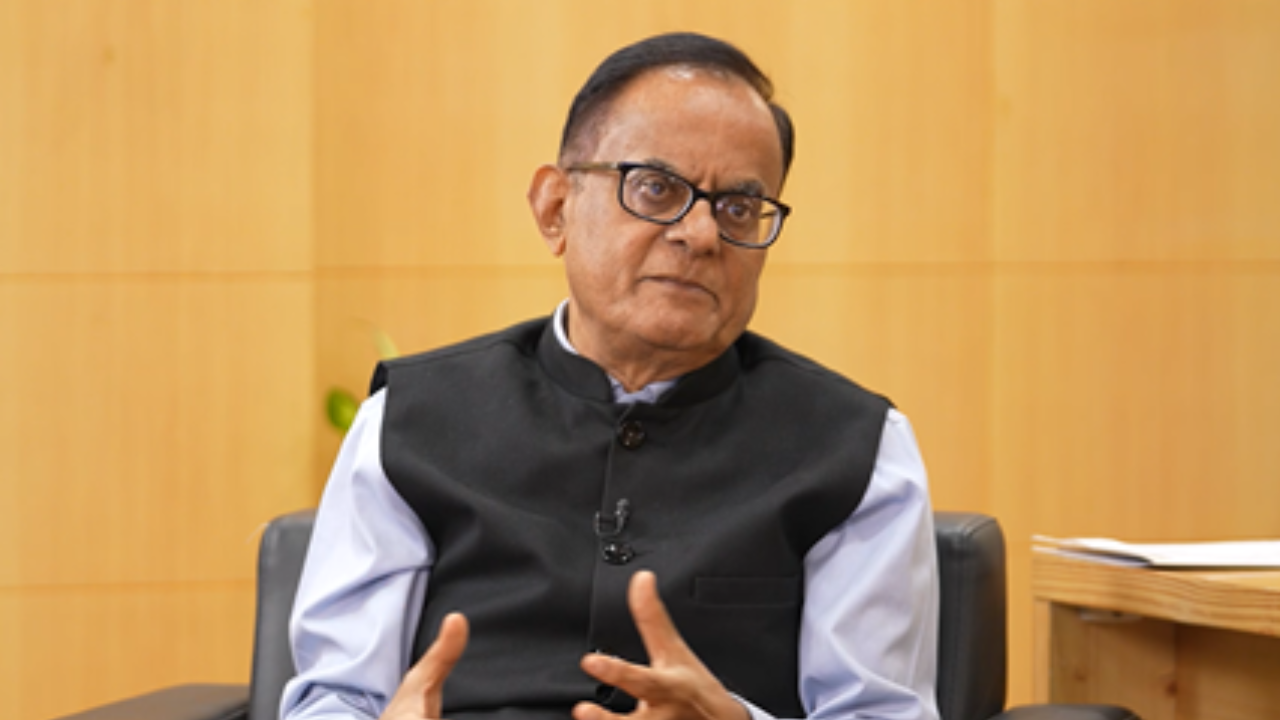
The Technology Advisory Group (TAG) of the Empowered Technology Group (ETG) convened its fourth meeting under the chairmanship of Ajay Kumar Sood, principal scientific adviser to the Government of India. The meeting focused on identifying priority technology domains for the telecom sector and assessing the need for a dedicated national R&D intervention.
EVENT

Digital Senate
Digital Senate is a premier conference uniting government leaders, technologists and innovators to share ideas, success stories and strategies on digital governance, public sector transformation, cybersecurity and emerging technologies in India.
EVENT


CIO Prism
CIO Prism unites forward-thinking technology leaders to exchange transformative insights, shape digital strategies, and foster innovation, empowering enterprises to excel in an era of rapid technological change.
Participants deliberated on strategies to strengthen India’s innovation-to-commercialisation ecosystem by enhancing capabilities in standards development, intellectual property creation, advanced manufacturing and resilient strategic supply chains.
Sood highlighted that telecom technologies form the foundation of India’s digital economy, enabling digital public infrastructure, artificial intelligence, cloud computing, industrial automation and critical infrastructure.
“While noting India’s emergence as one of the world’s largest telecom markets, he emphasised the need to build indigenous capabilities across the telecom value chain by strengthening research, standards, intellectual property, manufacturing and commercialisation,” the government statement said.
Amit Agarwal, secretary, Department of Telecommunications (DoT), outlined India’s vision for an integrated, future-ready telecom sector extending beyond traditional services to encompass data centres, non-terrestrial networks (NTN) — communication systems using satellites and high-altitude platforms rather than ground-based towers — space-based communications and AI-native networks.
Agarwal informed the meeting about DoT’s Digital Bharat Nidhi scheme, which provides funding support for research, innovation and early deployment of indigenous technologies.
Priority technology areas identified
Parag Agrawal, deputy director general of the Telecom Technology Development Fund (TTDF), emphasised the need to leverage India’s market potential to develop indigenous capabilities in strategic areas. These include 5G-Advanced and 6G technologies, AI-native networks, Open RAN — an approach that allows telecom operators to mix and match equipment from different vendors rather than relying on a single supplier — satellite communications, cloud-native networks and telecom semiconductors.
Advertisement
He highlighted the importance of enhancing India’s participation in global standardisation efforts and establishing advanced telecom testbeds to support research, innovation, validation and deployment of next-generation technologies.
Key industry and academic participants included Satish Jamadagni, chairman of the Telecommunications Standards Development Society, India (TSDSI); Sanjay Nayak, co-founder of Tejas Networks; Pavan Goenka, chairman of INSPACe; Debjani Ghosh, distinguished fellow at NITI Aayog; Vibha Mehra, country manager for Nokia India; and Robert J Ravi, chairman and managing director of BSNL.
Participants called for focused investments in 6G technologies and a unified, mission-mode approach. They emphasised development of indigenous standards and Indian standard-essential patents (SEPs) — patents covering technologies that must be used to comply with an industry standard — to bolster India’s global technology leadership.
The deliberations advocated for a dedicated ecosystem to strengthen market access, product-linked incentives, domestic chip design and long-term technological sovereignty. Participants also discussed strategic opportunities offered by non-terrestrial networks and the need to scale India’s telecom industry through stronger market access.
Policy and funding frameworks should support indigenous design, development and manufacturing by facilitating market access, aligning government procurement with domestic innovation and establishing product-linked incentive mechanisms to enable the transition of technologies from laboratory to market, according to the discussions.
Parvinder Maini, scientific secretary at the Office of the Principal Scientific Adviser (OPSA), summarised the key outcomes. She observed that a broad consensus had emerged on strengthening India’s strategic autonomy across the telecom technology value chain.
“She highlighted the need to bridge the critical gap between laboratory innovation and market adoption through structured support for prototyping, field validation, interoperability testing, certification and commercialisation, alongside greater private sector participation,” the statement noted.
Maini underscored the importance of a whole-of-government and whole-of-ecosystem approach, complemented by calibrated global partnerships, to enhance India’s competitiveness in next-generation communication technologies.
Agarwal reiterated the need for unwavering policy clarity and decisive government procurement support as two important pillars. He positioned the ETG as a trusted, neutral mechanism for technology assessment and strategic guidance in frontier communication technologies.
Your Questions, Answered
What is the Communication Technology Task Force proposed by the government?
The Communication Technology Task Force is a proposed mechanism to guide national priorities and strengthen ecosystem-wide coordination for India’s telecom research and development. It emerged from deliberations at the Technology Advisory Group meeting on 10 July 2026.
What are the priority technology areas identified for India’s telecom sector?
The priority areas include 5G-Advanced and 6G technologies, AI-native networks, Open RAN, satellite communications, non-terrestrial networks, cloud-native networks and telecom semiconductors.
How will Digital Bharat Nidhi support telecom innovation?
DoT’s Digital Bharat Nidhi scheme provides funding support for research, innovation and early deployment of indigenous telecom technologies, helping bridge the gap between laboratory innovation and market adoption.
What is Open RAN and why is it important for India?
Open RAN is an approach that allows telecom operators to mix and match equipment from different vendors rather than relying on a single supplier. It is considered important for reducing dependency on foreign vendors and building indigenous capabilities.